
Local College Access Networks
Local College Access Networks
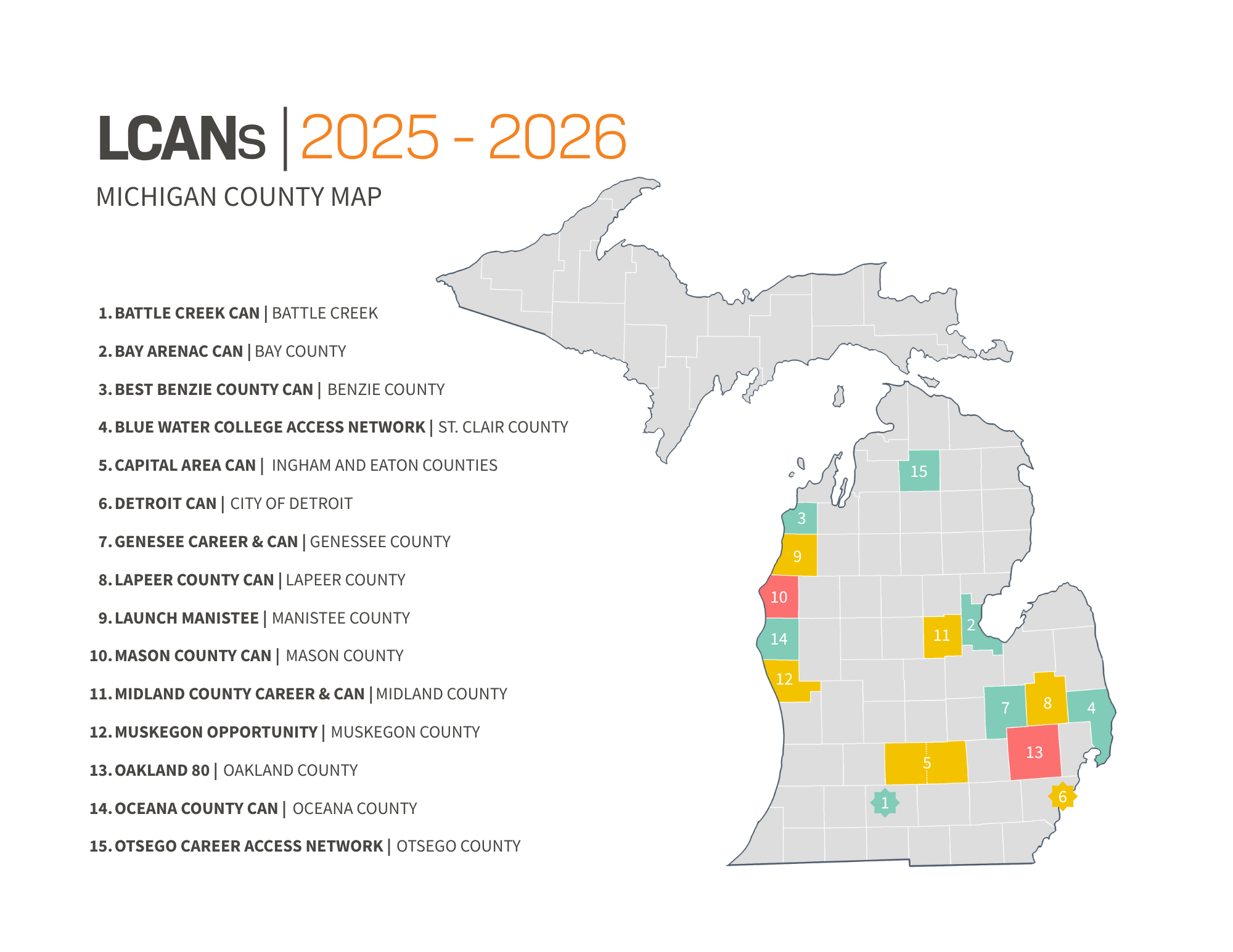
Local College Access Networks (LCANs) are community-based college access alliances supported by a team of community and education leaders representing K-12, higher education, the nonprofit sector, government, business, and philanthropy. These coalitions are committed to building a college-going culture and dramatically increasing college readiness, participation, and completion rates within their community. LCANs coordinate and expand programs, services and resources that lower barriers preventing students from pursuing postsecondary educational opportunities. MCAN serves as the primary support organization to LCANs by providing technical assistance and grant opportunities.
LCANs organize community leaders around a singular vision: Increase the community’s postsecondary educational attainment level in order to lay the foundation for a vibrant economy, healthy community, and strong workforce equipped to compete in a 21st century global economy. An LCAN sets goals focused on student successes, establishes a system of data gathering and analysis, reports results, and holds partners accountable for performance. It is important to note a Local College Access Network is not a new program of the community or of one particular organization within the network. LCANs primarily coordinate and mobilize college access efforts rather than provide direct services to students and families.

Related Resources
Charting the Course
MCAN's second edition of Charting the Course. A guide to communities for increasing educational attainment through the lens of collective impact.
Collective Impact Benchmarks
MCAN has designed a set of Benchmarks using the Collective Impact framework as described in Charting the Course. These Benchmarks can be used by communities as they build an LCAN, as well as by existing LCANs.